
Disclaimer: The following is for informational purposes only and not financial advice. Always do your own due diligence. I am not a licensed advisor.
Understanding the Bito Dividend History: A Deep Dive into Bitcoin ETFs
The world of Bitcoin has always been synonymous with volatility, offering both excitement and risk for investors. But what if you could benefit from Bitcoin’s price movements without directly owning the cryptocurrency? This is where Bitcoin ETFs come into play, especially the ProShares Bitcoin Strategy ETF (BITO). Known for its eye-popping yield, the BITO ETF has been a popular choice among investors looking for passive income through Bitcoin exposure. In this article, we’ll delve into the Bito dividend history, examine how it works, and explore whether it’s the right investment for you.
The Allure of Bitcoin ETFs and Their Dividends
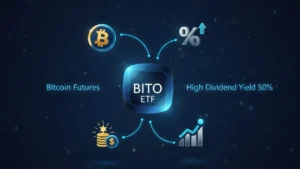
Bitcoin ETFs like BITO offer a way to gain exposure to Bitcoin’s price movements without the hassle of owning or securing the cryptocurrency. Instead of holding actual Bitcoin, BITO invests in Bitcoin futures contracts, which are agreements to buy or sell Bitcoin at a future date. This strategy comes with its own set of challenges and benefits, impacting the ETF’s performance and, consequently, its dividends.
In the case of ProShares BITO ETF, the fund’s dividend yield has garnered significant attention. As of 2025, BITO is offering an annualized dividend yield of over 50%. But, as with any high-yield investment, there’s more to the story. It’s crucial to understand how this yield is generated, what it means for your returns, and the factors that influence its volatility.
How BITO ETF Works: A Glimpse into the Mechanics
BITO is a futures-based ETF, meaning it doesn’t directly hold Bitcoin. Instead, it tracks Bitcoin’s price through futures contracts, a strategy that introduces both risk and reward. The fund’s dividend payouts are tied to the performance of these futures contracts, which means that the payouts can vary significantly month-to-month.
One of the key benefits of BITO is that it allows investors to gain exposure to Bitcoin without the need for crypto wallets, private keys, or dealing with the complexities of crypto exchanges. But there’s a catch—since the ETF is based on futures contracts, it doesn’t perfectly mirror Bitcoin’s price. In periods of market volatility or “contango,” where future contracts are priced higher than the spot price, BITO may underperform relative to Bitcoin’s direct movements.
The Bito Stock Dividend History: Volatility Meets Opportunity
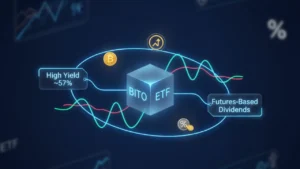
As you explore the Bito stock dividend history, you’ll notice that its payouts aren’t like traditional dividends from blue-chip stocks. While BITO’s yield may appear to be high—sometimes reaching 57% or more—it’s a reflection of short-term trading gains from futures, not steady income like you might see with stocks like ProShares Bito dividend history.
The key point here is that BITO’s dividends come from realized gains on futures trades, which fluctuate based on Bitcoin’s price and the costs associated with rolling over contracts. For example, in months where Bitcoin’s price surges, BITO may experience a spike in dividend payouts. However, when Bitcoin experiences a price decline or market stagnation, the dividend yield could fall as well. This makes it important for investors to understand the volatility of BITO’s payouts before diving in.
Factors Affecting Bito ETF Dividend History
When analyzing the Bito ETF dividend history, several factors come into play. The first is the roll yield—a phenomenon where the futures contracts need to be constantly rolled over to maintain exposure to Bitcoin. In times of “contango,” where longer-dated contracts are more expensive, BITO experiences a “negative roll yield,” which can drag on returns. This is why BITO’s performance often lags behind the actual price of Bitcoin, especially over the long term.
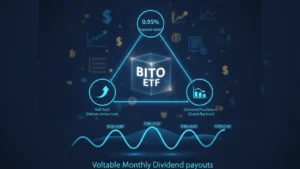
Another important factor is expense ratio. BITO’s expense ratio is 0.95%, which, while not astronomical, can add up over time and erode overall returns. The ETF also pays its dividends monthly, but the payout amounts can vary greatly depending on the performance of Bitcoin futures and the fund’s management of its assets. For instance, in September 2025, the payout dropped to 86 cents per share, a stark contrast to the previous month’s 1.20.
Is Bito ETF Right for Your Portfolio?
Now, the big question: Should you invest in BITO? The answer largely depends on your investment goals. BITO is an attractive option for those seeking high yield and the opportunity to capitalize on Bitcoin’s volatility. However, it’s important to recognize that this investment is not for the faint of heart.
If you’re looking for steady income with predictable dividends, BITO may not be the best fit. The payouts can be inconsistent, and the fund’s reliance on futures contracts introduces a level of complexity that many investors may find challenging. On the other hand, if you’re comfortable with volatility and looking for short- to medium-term exposure to Bitcoin, BITO could be a great addition to your portfolio.
Bito ETF vs. Other Bitcoin ETFs: How Does It Stack Up?
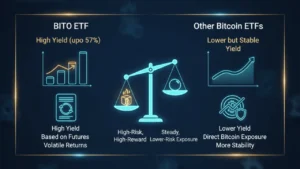
When comparing BITO’s dividend history to other Bitcoin ETFs like BITO stock dividend history and ProShares Bito dividend history, you’ll find similar structures but with varying dividend yields and expense ratios. Bito ETF dividend history stands out for its high yield potential, but that yield is heavily dependent on the performance of Bitcoin futures and market conditions.
Other Bitcoin ETFs may offer lower dividends but could be more stable or directly track Bitcoin’s price, providing a different type of exposure. It’s essential to consider how each ETF fits into your overall portfolio strategy and risk tolerance. To explore more Bitcoin ETF strategies, check out our Best Short Bitcoin ETF & 2X Strategy & More.
Conclusion: The Future of Bito ETF
As Bitcoin continues to evolve, so too will the performance and structure of Bitcoin ETFs like BITO. Investors who understand the unique mechanics behind BITO’s dividends—such as its reliance on futures contracts, roll yield, and tax treatment—will be better prepared to make informed decisions.
Whether you’re interested in Bito stock dividend history, ProShares Bito dividend history, or bito etf dividend history, it’s crucial to recognize that high yields come with high risk. As with all investments, be sure to assess your own risk tolerance and consult with a financial advisor to ensure that your investment strategy aligns with your long-term financial goals.